
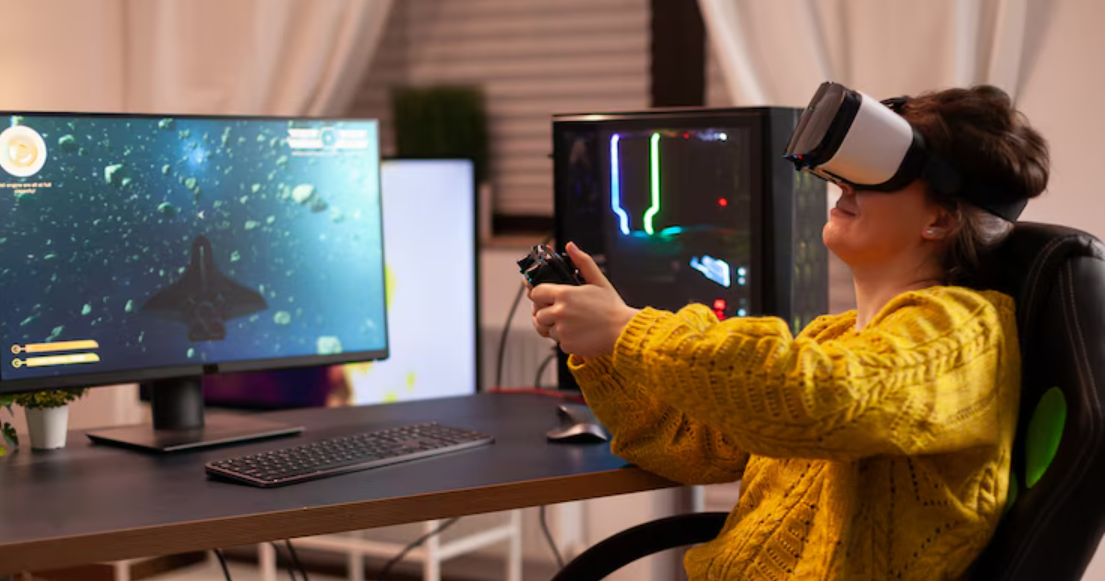
NVIDIA DLSS is transforming the way gamers experience PC graphics by harnessing the power of artificial intelligence. This AI-driven technology boosts performance, improves image quality, and reduces latency, enabling smoother gameplay without compromising visual fidelity. In this blog, we explore what NVIDIA DLSS is, how it works, its benefits, supported platforms, and why it’s a game-changer for modern gaming.
Introduction: What Is NVIDIA DLSS and Why It Matters for Gamers?
NVIDIA DLSS (Deep Learning Super Sampling) is an AI-powered rendering technology available on NVIDIA’s GeForce RTX graphics cards. It allows games to be rendered at a lower resolution and then intelligently upscaled to higher resolutions using deep learning neural networks.
This process dramatically increases frame rates while maintaining or even enhancing image quality, making it essential for gamers who want high performance without sacrificing visuals. DLSS also helps offset the heavy performance cost of advanced graphics features like ray tracing, enabling realistic lighting and shadows without slowing down gameplay.
How NVIDIA DLSS Uses AI to Boost Gaming Performance?
At its core, NVIDIA DLSS uses dedicated Tensor Cores on RTX GPUs to run a trained AI model that reconstructs high-resolution images from lower-resolution inputs. The AI is trained on super-high-resolution frames, learning to predict and generate details that would appear in a fully rendered high-res frame.During gameplay, the GPU renders frames at a lower resolution to reduce workload, and DLSS then upscales these frames in real time, filling in details and smoothing edges.
Recent iterations, such as DLSS 3 and DLSS 4, have introduced frame generation technology, where AI creates entirely new frames between rendered frames. This further boosts frame rates and responsiveness, particularly benefiting GPU- or CPU-limited systems. Multi Frame Generation in DLSS 4 enhances this effect by producing multiple AI-generated frames per rendered frame, delivering smoother motion and clearer images.
Benefits of NVIDIA DLSS: Higher FPS, Lower Latency, and Improved Image Quality
NVIDIA DLSS offers several key benefits for gamers:
- Higher Frame Rates: By rendering at lower resolutions and upscaling, DLSS can increase FPS by up to 75% or more, depending on the game and hardware.
- Lower Latency: Frame generation technology reduces input lag, making gameplay more responsive.
- Improved Image Quality: DLSS produces images that rival or exceed native resolution rendering, often with sharper details and reduced aliasing.
- Better Ray Tracing Performance: DLSS offsets the demanding processing of ray tracing, allowing gamers to enjoy realistic lighting effects without major performance hits.
- Customizable Quality Modes: Users can select from Performance, Balanced, Quality, and Ultra Quality modes to prioritize either frame rate or visual fidelity according to their preference.
How NVIDIA DLSS Enhances Visual Fidelity Without Sacrificing Performance?
Unlike traditional upscaling methods that often result in blurry or artifact-ridden images, NVIDIA DLSS uses deep learning to intelligently reconstruct frames. It leverages temporal data from previous frames and motion vectors to predict high-quality visuals, effectively reducing jagged edges and enhancing texture clarity.
The AI model continuously improves as it is trained on more data, enabling DLSS to adapt to different games and scenarios. This results in smoother edges, better anti-aliasing, and more accurate lighting and shadows. DLSS 4’s advancements in ray reconstruction further sharpen ray-traced effects, making scenes look more realistic while keeping performance costs low.
- Supported Games and Platforms: Where You Can Experience NVIDIA DLSS
NVIDIA DLSS is supported on a growing list of games across multiple genres, including popular titles like Cyberpunk 2077, Minecraft RTX, Control, and Fortnite. Developers frequently integrate DLSS into new releases and updates, expanding its availability.
DLSS requires an NVIDIA GeForce RTX graphics card, starting from the RTX 20-series up to the latest RTX 50-series GPUs. It is compatible with Windows PCs and supported on major game engines, ensuring broad accessibility for gamers worldwide.
The Future of NVIDIA DLSS: AI Innovations Shaping PC Gaming Graphics
As NVIDIA continues to innovate, DLSS is evolving rapidly. DLSS 4 introduces Multi Frame Generation and Transformer-based AI models that deliver even higher frame rates and sharper images. Future developments may further integrate AI to enhance real-time rendering, lighting, and texture detail, pushing the boundaries of visual realism.
The combination of AI-powered frame generation and neural rendering positions DLSS as a cornerstone technology in the future of PC gaming graphics, enabling richer experiences on a wider range of hardware.
Conclusion: Why NVIDIA DLSS Is a Game-Changer in Modern Gaming?
NVIDIA DLSS revolutionizes PC gaming by combining AI-driven upscaling and frame generation to deliver higher frame rates, lower latency, and superior image quality. It empowers gamers to enjoy cutting-edge graphics, including ray tracing, without compromising performance. With broad game support and continual advancements, NVIDIA DLSS sets a new standard for immersive, smooth, and visually stunning gaming experiences.